
OPERATIONS
What a long-line lift makes possible
JUL 24, 2026 · 4 MIN READ · GAMMA HELICOPTERS
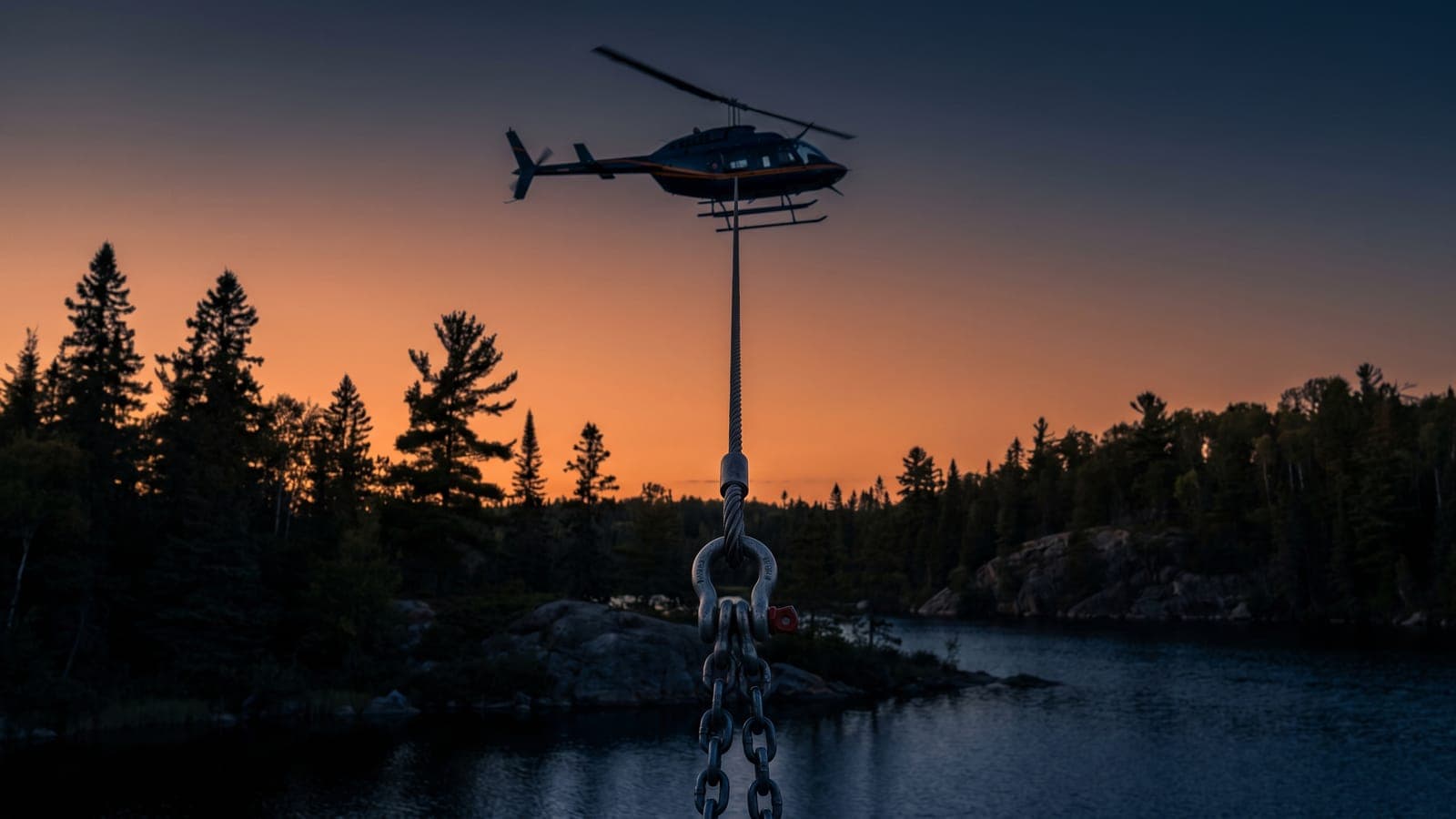
There's a moment on every remote job where the plan meets the map and loses. The transmission tower section is sitting in a laydown yard. The site is forty kilometres past the last road, on the far side of muskeg that swallows machines whole. The schedule says this week.
That's the moment people call for a long line.
What it is
Long-line work means flying a load on a line slung beneath the aircraft — up to roughly 2,750 lb on our hook — and setting it down precisely where the ground crew needs it. Not "in the clearing." On the pad. Beside the foundation. Through the gap in the trees the crew flagged that morning.
A good long-line pilot places loads the way a crane operator does, except the crane is moving, the ground may be water, and the nearest road might be a township away.
Where it earns its keep
- Utility corridors — tower sections, hardware and material flown along the line faster than any winter road can be built.
- Remote construction — generators, camp supplies, building materials delivered over terrain no truck can cross.
- Rail support — equipment and material to washouts and work sites between access points.
- Season-critical windows — when freeze-up or break-up closes the ground routes, the air route stays open.
Why precision matters more than lift
Plenty of loads fit under 2,750 lb. The harder question is where they land. A load set down ten metres wrong on a tight site is a half-day of ground work; set down right, the crew bolts it up before lunch. That's the real product of long-line flying: placement, not just transport.
The helicopter doesn't replace the ground crew. It hands them the job at arm's reach.
Planning a lift
Every lift starts with a conversation: the load, the site, the weather window, what's on the ground and who's running it. From our Cochrane base the aircraft relocates to wherever the work is — anywhere in Canada. One call starts the planning, and if the job is urgent, remember that our pilots are on standby 24/7.